

A career palm reading usually examines the fate line first, then the head line, Sun line, Mercury features, fingers, thumb, and whole-hand texture. The goal should be to discuss preferences—structure or variety, solitary or social work, ideas or hands-on activity—not to name one destined profession. Palmistry cannot predict a job offer, salary, promotion, business success, or financial outcome.
The line that draws your attention often arrives with a real question beneath it—about love, purpose, work, or the next turning point. Let the pattern invite a deeper conversation with yourself.
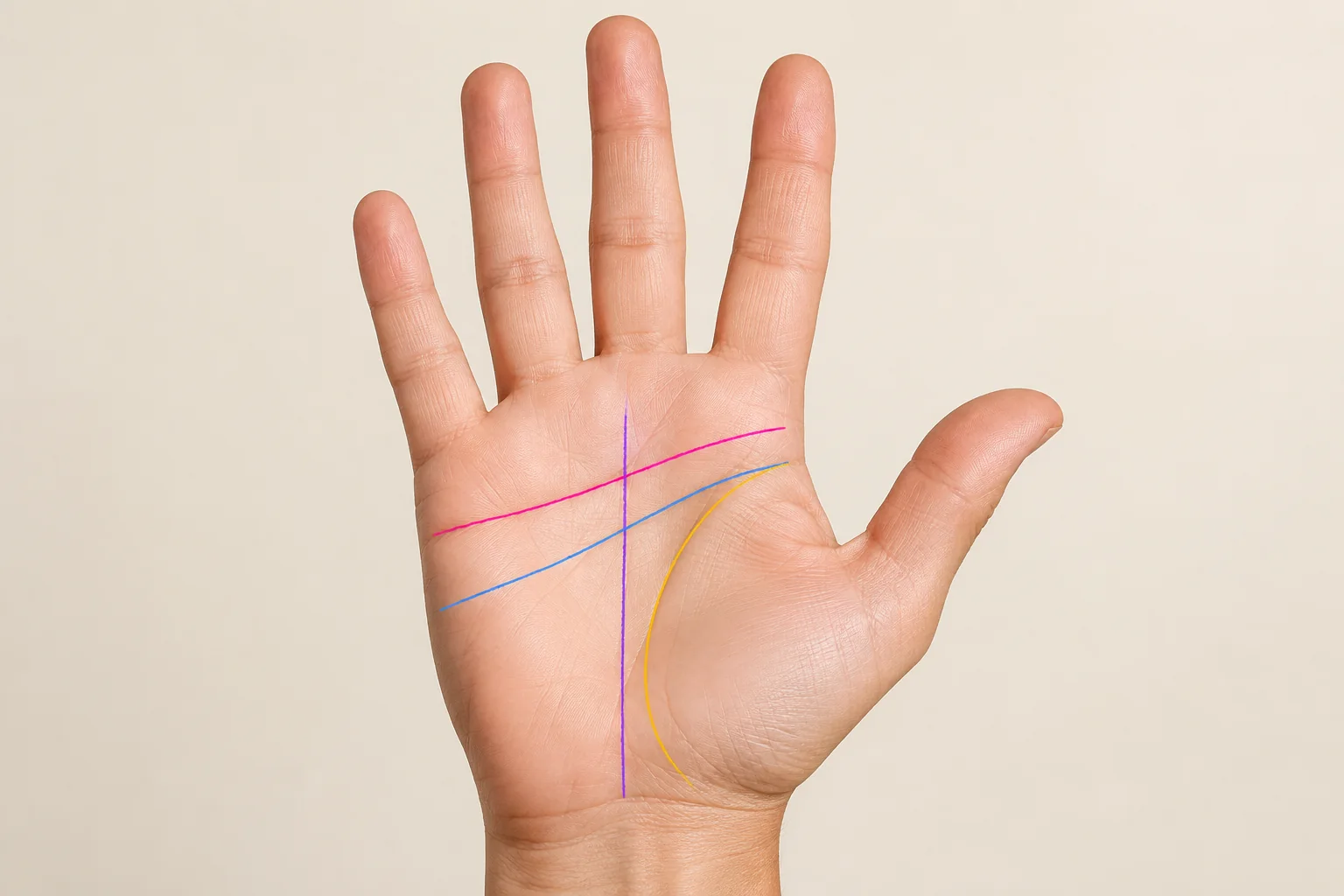
Which palm features are linked with career?
- Fate line: direction, commitments, and how structured a path feels.
- Head line: a symbolic language for practical, imaginative, concentrated, or wide-ranging thought.
- Sun line: expression, recognition, satisfaction, or absorption in a craft.
- Mercury line and little finger: communication, trade, exchange, explanation, and dexterity.
- Index finger: standards, responsibility, and desire for influence.
- Middle finger: structure, boundaries, patience, and duty.
- Ring finger: presentation, creativity, risk, and visibility.
- Thumb: how palmistry frames will, judgment, and adaptability.
A responsible career-reading process
- Ask what the person wants from the conversation.
- Compare both hands and record observations before meanings.
- Describe the fate and head lines without assigning ages.
- Add only clear minor lines and pronounced finger proportions.
- Look for repeating or contradictory themes.
- Offer two or three work conditions to explore, not a job verdict.
For example, a clear fate line plus a straight head line might traditionally prompt discussion of long projects and defined goals. A faint fate line with a branching head line might prompt discussion of variety or self-directed paths. Neither combination proves what a person can do.
Questions that turn symbolism into useful reflection
- Do you prefer a clear structure or freedom to redesign the process?
- Which matters more now: mastery, service, autonomy, stability, creativity, or recognition?
- Do you gain energy from people, focused solo work, or a mixture?
- Which skills have real evidence behind them—projects, feedback, training, or results?
- What small experiment could test a possible direction safely?
What a layered vocational method adds
One approach begins with texture, moves through thumb and fingers, then adds prints, major lines, and minor lines. Its strongest principle is not to prescribe a specific job but to discuss a field or working environment. This keeps the reflection focused on the direction that feels meaningful to you.
What career palmistry should never claim
Do not forecast hiring dates, promotions, layoffs, earnings, exam results, business profit, or “lucky” industries. Do not tell someone to quit, invest, reject an offer, or avoid education because of a line. Use labour-market information, financial advice, mentors, aptitude evidence, and the person’s circumstances for real decisions.
How to handle apparently conflicting career signs
A person might have a traditionally structured fate line and fingers associated with variety or expression. Do not decide that one feature “wins.” Explore the practical combination: perhaps the person likes a stable organization but changing projects, or a clear profession with creative freedom. Then ask for real examples.
Career line, fate line, or Sun line?
“Career line” is often another name for the fate line, not a separate universally recognized crease. Smaller vertical lines may be called job or influence lines by some readers. The Sun line addresses expression and recognition, while Mercury themes concern exchange and communication. State your vocabulary so the reader does not mistake several names for several anatomical structures.
Turn a reading into a low-risk experiment
If a theme suggests teaching, try one workshop before changing careers. If autonomy stands out, lead a contained project. If variety matters, compare roles by weekly tasks rather than title. Record what energizes you and what produces good feedback. These experiments generate evidence that the palm cannot provide.
Frequently asked question: which hand shows career?
Many modern palmists emphasize the dominant hand for current choices and compare the other for background tendencies. This is a convention, not a forecast. Use both hands, and give actual experience more weight than either.
Start with the strongest work themes
Study the fate line, head line, and Sun line before considering smaller signs.
Research and source note
The layered sequence and “field, not specific job” principle come from modern palmistry teaching. For evidence-based career exploration, the U.S. Department of Labor’s O*NET describes occupations by real tasks, skills, and work contexts.
The bottom line
Career palmistry is most constructive when it generates questions about work conditions and values. Combine features, stay conditional, and test ideas against skills, opportunities, and lived experience.
A Full Palm Reading
Bring every career indicator into one connected reading
A career-focused palm reading combines the fate, Sun, head, and Mercury lines with your thumb, fingers, mounts, hand shape, and both palms around the work question you bring.
Your Full Palm Reading maps all the important features—hand shape, skin texture, thumb, fingers, mounts, major and minor lines, markings, and the differences between both palms—and brings them together in a holistic reading focused on your questions.