
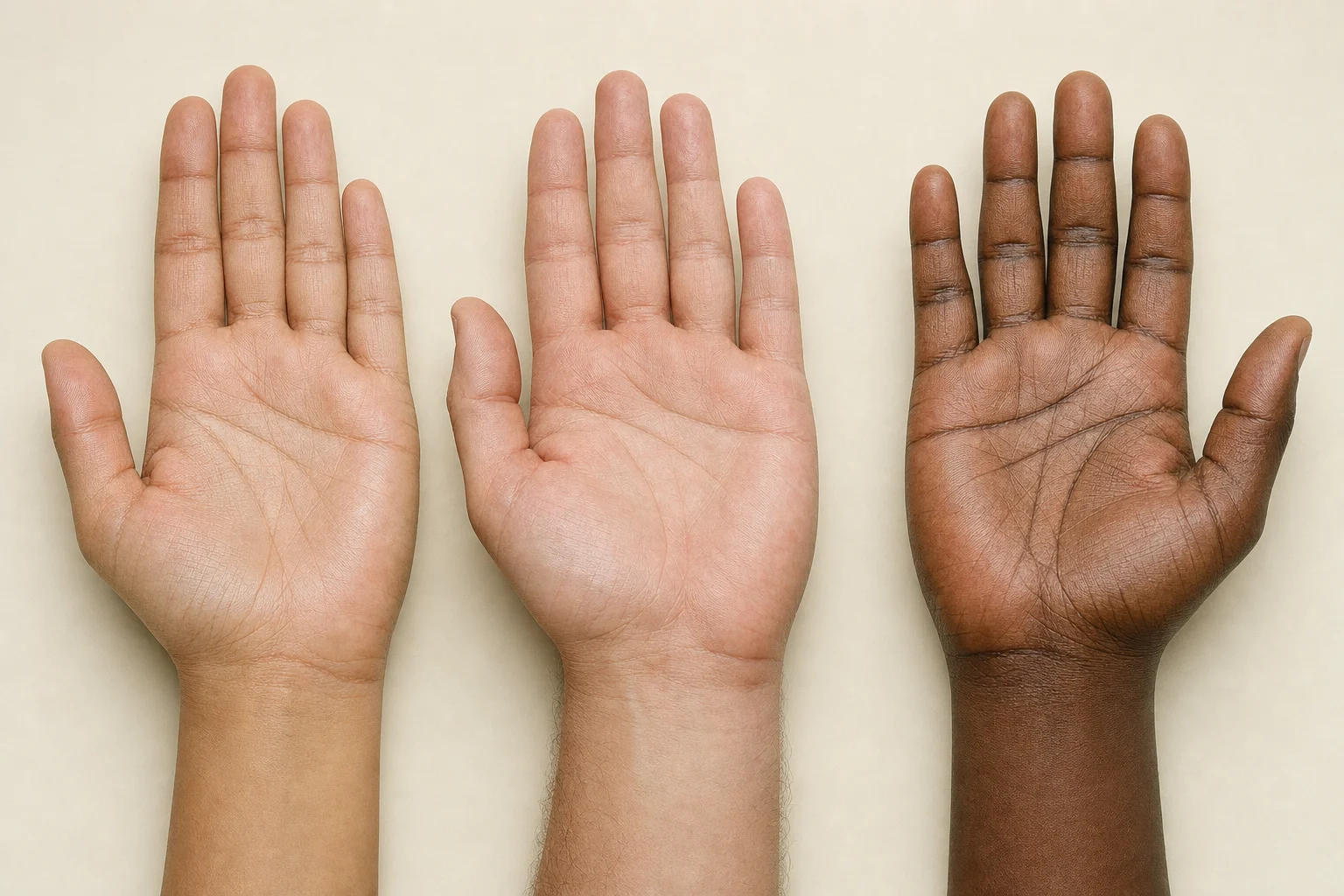
In palmistry, skin texture is traditionally observed before individual lines. Readers may describe it as fine or silky, medium or paper-like, grainy, or coarse. Finer texture is symbolically linked with receptivity and nuance; coarser texture with direct, practical engagement. These associations are traditional metaphors, not evidence of personality, sensitivity, or occupation.
The line that draws your attention often arrives with a real question beneath it—about love, purpose, work, or the next turning point. Let the pattern invite a deeper conversation with yourself.
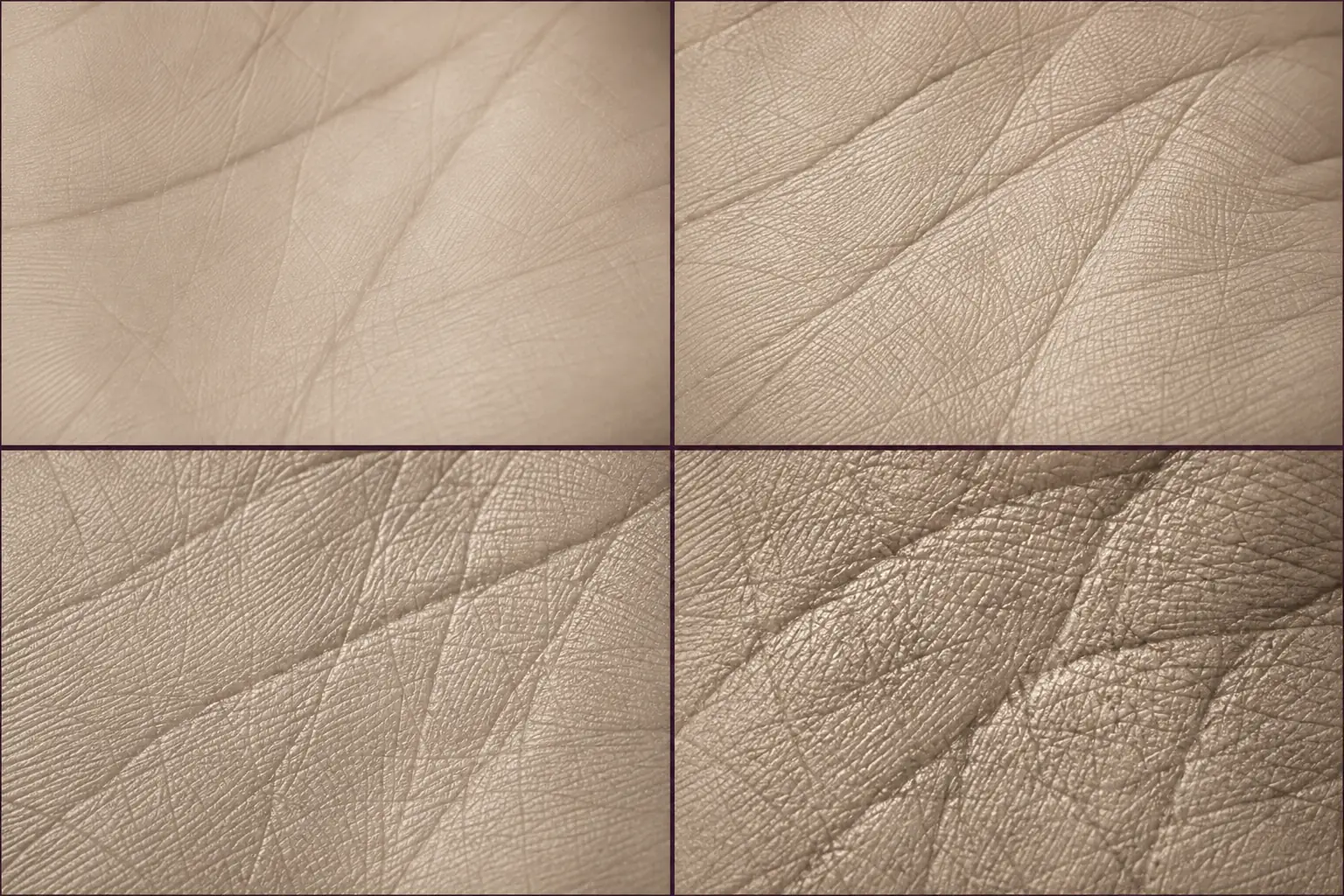
How to observe hand texture
Ask permission before touching someone. A visual reading can note ridge visibility and surface condition; a tactile reading should use a light stroke and never press painful or irritated skin. Observe the palm and back of the hand, but record calluses separately.
Keep texture distinct from three other qualities:
- Line depth: how strongly an individual crease is cut.
- Firmness: how the soft tissue responds to gentle pressure.
- Flexibility: the hand’s comfortable range of movement.
Four traditional texture descriptions
Fine or silky
Very smooth skin with subtle ridges is traditionally associated with responsiveness, delicacy, aesthetic awareness, and preference for lower-intensity surroundings. It does not prove psychic ability, fragility, allergies, or emotional sensitivity.
Medium or paper-like
A fine but perceptibly ridged texture is often framed as a middle range: responsive without being easily overwhelmed. Some authors connect it with verbal or visual interests, but texture cannot establish how a person learns or communicates.
Grainy
Clearly felt ridges and a slightly rough surface are traditionally linked with activity, quick engagement, and desire for stimulation. Do not infer fitness, patience, or profession from this observation.
Coarse
Thicker, rougher texture is associated in older texts with physical directness and practical interests. Historical language often became classist or insulting. A modern reading should never equate rough skin with low refinement, intelligence, empathy, or moral worth.
Why hand texture changes
Weather, hydration, frequent washing, detergents, eczema, manual work, sports, musical practice, age, and many other factors can change the surface. Sweat may reflect temperature or nervousness in the moment. Calluses are adaptations to friction and pressure, not character signs.
Palm and fingerprint ridges are genuine anatomical structures used in grip and touch. Dermatoglyphics studies ridge patterns; it does not validate the personality meanings palmistry attaches to how skin feels.
Consent, hygiene, and medical boundaries
Do not touch broken skin, rashes, or painful areas. Wash hands between in-person sessions and offer a no-touch option. A palmist should not interpret persistent dryness, colour changes, sweating, sores, numbness, or swelling. Those observations may have many causes and deserve appropriate medical advice if they concern the person.
Palm texture versus fingerprint pattern
Texture describes the overall tactile surface. Fingerprint pattern describes the direction of friction ridges—loop, whorl, or arch—in a specific area. Someone can have a smooth-feeling hand and a whorl, or a rough hand and a loop. Keep the observations independent so one does not become “evidence” for the other.
How to record texture consistently
Use neutral notes such as “fine ridges, dry today, callus below index finger” rather than “sensitive person.” Record the room temperature and whether the person has recently washed or applied lotion if texture matters to the exercise. Compare the same central palm area on each hand with the same gentle touch.
If a reading happens from photographs, do not pretend to assess touch. High-resolution images can show ridges, flaking, and calluses, but not softness, firmness, warmth, or moisture reliably. State that limitation.
Frequently asked questions
Does rough skin mean a difficult personality?
No. Roughness commonly reflects friction, environment, and skin condition. Older character judgments are stereotypes.
Does sweaty palm skin have a palmistry meaning?
Some traditions call it heightened emotion, but temperature, exertion, stress, and medical factors can all affect sweat. It is not a reliable character sign.
Separate surface from pattern
After noting texture, study loops, whorls, and arches separately, then use the complete checklist to move from whole hand to lines.
Research and source note
The four descriptive texture categories come from modern palmistry teaching. We retain the observation method while keeping interpretations symbolic. See the NCBI skin anatomy overview for anatomical context.
The bottom line
Describe texture neutrally and account for environment, work, and skin condition. Its palmistry meanings are symbolic; roughness or smoothness never establishes a person’s character or health.
A Full Palm Reading
Add skin texture to the complete hand pattern
A personal reading starts with the hand's overall texture and flexibility, then checks how that foundation changes the meaning of its shapes, mounts, fingers, and lines.
Your Full Palm Reading maps all the important features—hand shape, skin texture, thumb, fingers, mounts, major and minor lines, markings, and the differences between both palms—and brings them together in a holistic reading focused on your questions.